

Can My Child Get Braces With Baby Teeth? The Short Answer
Yes, your child can get braces even if they still have baby teeth. This is called early or Phase 1 orthodontic treatment, and it addresses bite and jaw issues before all permanent teeth come in. The American Association of Orthodontists (AAO) recommends every child have their first orthodontic evaluation by age 7.
Not every child needs early treatment. But an early exam lets an orthodontist spot developing issues like crossbites, crowding, or jaw growth changes while your child is still growing. At Laurent Orthodontics, Dr. Caroline Laurent evaluates each child individually to decide if early care is the right call, or if it’s better to simply monitor and wait for the right moment.
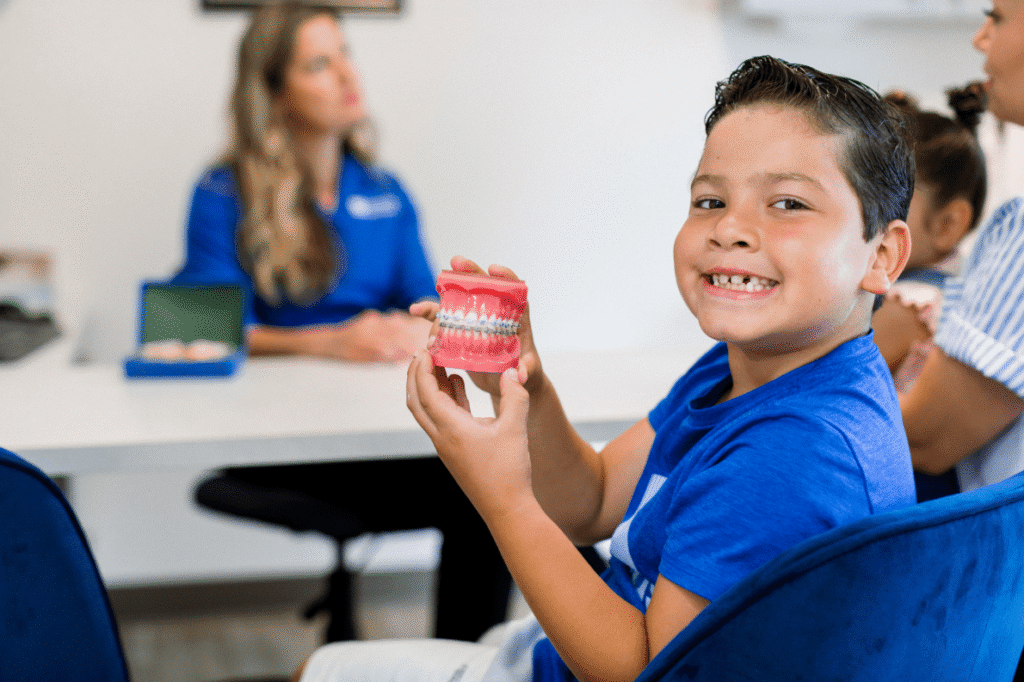
What Is Phase 1 (Early) Orthodontic Treatment?
Phase 1 orthodontics is early interceptive care given while your child still has a mix of baby and adult teeth. It usually happens between ages 6 and 10 during the “mixed dentition” stage. The goal is to correct bite issues, guide jaw growth, and make room for adult teeth.
Beyond that core aim, Phase 1 isn’t about straightening every single tooth. It’s about laying the groundwork so that later care, if needed, is simpler and shorter. This differs from Phase 2 (or complete) treatment, which usually happens in the teen years once most permanent teeth are in place.
Depending on your child’s needs, Phase 1 may involve:
- Palatal expanders to widen a narrow upper jaw
- Partial braces on select teeth to correct bite or spacing issues
- Space maintainers to hold room for adult teeth after early baby tooth loss
- Habit appliances to help stop thumb sucking or tongue thrusting
Phase 1 treatment usually lasts 6 to 12 months. After that, most kids enter a resting period where Dr. Laurent monitors growth as the remaining permanent teeth come in.
How Braces Work When Baby Teeth Are Still Present
When your child has both baby and adult teeth, treatment looks a little different from what you might picture. As a Harvard & UCSF-trained orthodontic specialist, Dr. Laurent starts with digital photographs and X-rays to see how the jaw is developing and where permanent teeth are positioned beneath the gums.
From there, appliances are chosen to work with your child’s growth, not against it. An expander might widen the arch to prevent future crowding. Partial braces may be placed only on the permanent teeth that are already in, guiding them into better positions.
Here’s the reassuring part: baby teeth still fall out on their own schedule during treatment. Nothing about early braces speeds up or slows down that natural process. As adult teeth erupt, Dr. Laurent tracks their progress and adjusts the plan if needed.
Once Phase 1 wraps up, most kids take a break from active treatment. This resting period gives the remaining permanent teeth time to come in before any Phase 2 care is considered. You can learn more about early braces options and what they involve.
Benefits of Early Orthodontic Treatment for Children
Early treatment isn’t about cosmetics. It’s about setting your child up for a healthier bite and easier future care. Here are the main benefits:
- Corrects harmful bite issues early, including crossbites, underbites, and severe overbites that get harder to treat as jaws finish growing
- Guides jaw growth to create room for incoming permanent teeth, often preventing serious crowding
- May reduce the need for extractions or jaw surgery later in the teen years
- Improves function like chewing, speech, and in some cases breathing
- Protects protruding front teeth from chips or trauma during sports and play
- Boosts confidence at an age when kids are becoming aware of their smiles
How Do I Know If Early Treatment Is Worth It?
Because Dr. Caroline Laurent is a Harvard & UCSF-trained orthodontic specialist, families trust her judgment on timing. With a Bachelor of Science from the University of Notre Dame, a dental degree from Harvard School of Dental Medicine, and a master’s degree and specialty certification in orthodontics from UCSF, she knows when early treatment truly benefits a child. She’s equally clear about when it’s better to wait and watch.
Will My Child Still Need Braces Later?
Sometimes, yes. Some kids only need Phase 1 to correct a specific issue and never require more. Others complete Phase 1 and later move into Phase 2 as teens to align the full smile. Dr. Laurent maps out the likely path during your first visit so you know what to expect.
Phase 1 vs. Phase 2: Understanding Two-Phase Treatment
Two-phase treatment splits orthodontic care into stages that match your child’s growth. Here’s how they compare:
| Feature | Phase 1 (Early Treatment) | Phase 2 (Complete Treatment) |
|---|---|---|
| Typical Age | 6 to 10 years old | 11 to 15 years old |
| Teeth Present | Mix of baby and adult teeth | Most or all permanent teeth |
| Main Goal | Guide jaw growth, correct bite, make space | Align and finish the full smile |
| Common Appliances | Expanders, partial braces, space maintainers | Full braces or Invisalign |
| Duration | 6 to 12 months | 12 to 24 months |
| Follow-Up | Resting/monitoring period | Retainers to hold results |
Not every child needs both phases. Some kids only need Phase 1 to correct a specific issue. Others skip Phase 1 entirely and start treatment as teens. And a smaller group benefits from both, with a resting period in between while adult teeth continue erupting.
The only way to know what your child needs is a professional evaluation. That’s why the AAO recommends age 7 as the ideal time for a first orthodontic visit.
What Affects the Cost of Early Braces?
The two biggest drivers of cost are the type of appliance used and the length of Phase 1 treatment. Insurance coverage and whether a second phase is needed also play a role. Here’s what typically influences the price:
- Type of appliance used. A simple space maintainer costs less than a palatal expander or a round of partial braces.
- Length and complexity of Phase 1. Shorter treatments with fewer adjustments cost less than longer, more involved care.
- Whether Phase 2 will be needed later. Some families pay for both phases; others only need one.
- Insurance coverage. Many dental plans include orthodontic benefits for children, which can lower out-of-pocket costs.
- Payment structure. Laurent Orthodontics offers easy financing with custom plans that fit your family’s budget.
The best next step is a free consult. There’s no cost or obligation, and you’ll leave with a clear picture of what your child needs (if anything) and what it will involve.
Does Your Child Need Early Braces? Signs to Watch For
Some orthodontic issues are easy to spot at home. Watch for these signs that your child may benefit from an early evaluation:
- Early or late loss of baby teeth (before age 5 or well past age 7)
- Difficulty chewing or biting into normal foods
- Mouth breathing or snoring at night
- Crowded, crooked, or blocked-out teeth as adult teeth come in
- Gaps that seem unusually wide between teeth
- Thumb sucking or pacifier use continuing past age 5
- Jaws that shift, click, or pop when opening and closing
- Front teeth that stick out noticeably beyond the lower teeth
- A crossbite or underbite where upper and lower teeth don’t meet properly
- Speech difficulties like lisping that don’t resolve with age
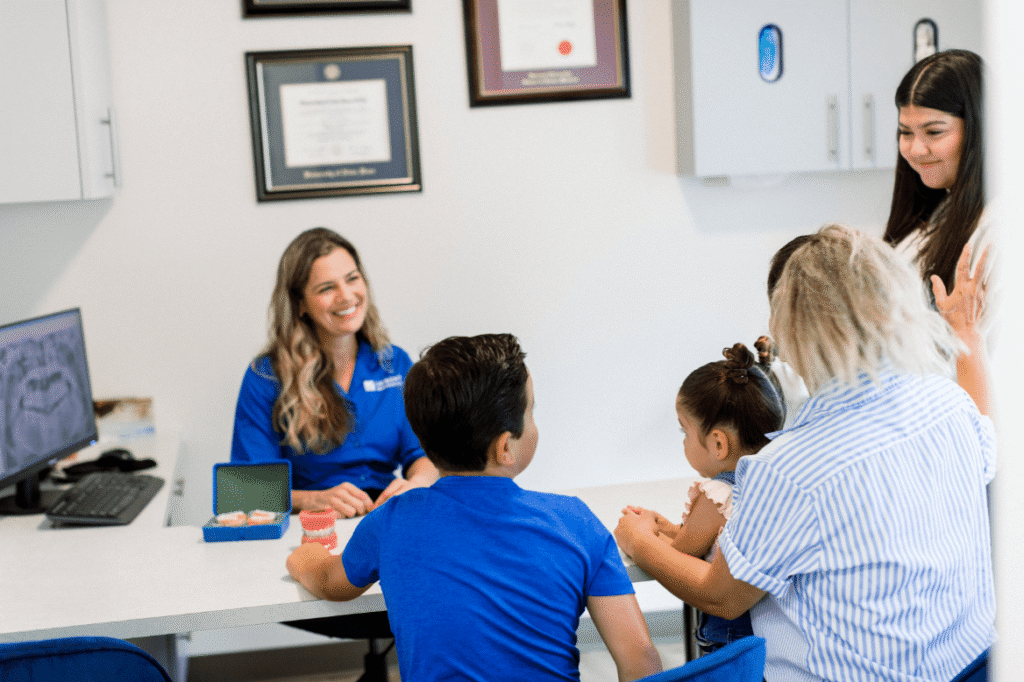
If you notice any of these, don’t wait. An evaluation by age 7 is the AAO’s recommendation, and it’s the best way to know for sure whether treatment is needed now, later, or not at all. Even if you’re unsure whether your child fits the picture, a quick exam gives you a clear answer and real peace of mind about their developing smile.
Frequently Asked Questions
Can my child get braces with baby teeth?
Yes. Children can get braces while they still have baby teeth through Phase 1 treatment. This early care focuses on guiding jaw growth and correcting bite issues rather than straightening every tooth. Dr. Laurent evaluates whether your child is a good candidate during a free consult.
At what age should my child first see an orthodontist?
The American Association of Orthodontists recommends a first orthodontic evaluation by age 7. At this age, enough adult teeth have come in for an orthodontist to spot developing issues while baby teeth are still present. Most kids won’t need treatment yet, but the exam sets a baseline.
Do early braces hurt my child?
Early appliances may feel a little tender for a few days after placement or adjustment, but they aren’t harmful. Most kids adjust quickly and go back to normal eating and playing within a week. Dr. Laurent and the team focus on a comfortable and easy experience for every young patient.
How long does Phase 1 treatment last?
Phase 1 treatment usually lasts 6 to 12 months, depending on your child’s needs. After active treatment, most kids enter a resting period where growth is monitored as permanent teeth come in. A second phase, if needed, typically begins in the early teen years.
Will my child need a second round of braces later?
Some children need only Phase 1 to correct a specific issue. Others move on to Phase 2 as teens once most permanent teeth are in place. And some skip early treatment entirely. A professional evaluation is the only way to know your child’s likely path.
At Laurent Orthodontics, we hold to a simple idea: everyone deserves a beautiful smile, and that starts with knowing what your child truly needs. Dr. Caroline Laurent has been creating smiles for more than a decade and is a proud member of the American Association of Orthodontists. Your smile is in expert hands. Book a free consult and let’s find out together whether Phase 1 treatment is right for your child.