
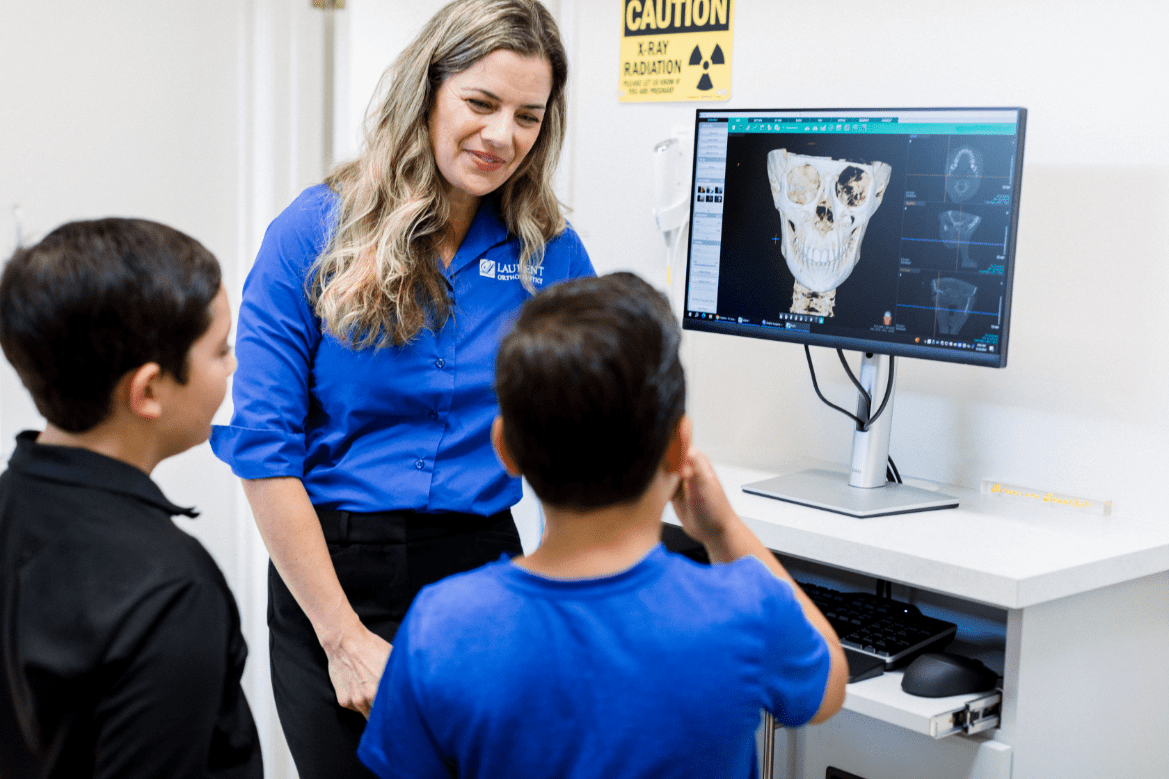
Choosing who straightens your teeth is a bigger decision than most people realize. So what’s the difference between an orthodontist and a general dentist doing my braces or Invisalign? Both are licensed dentists, but orthodontists complete additional years of specialty training focused only on tooth movement. Below, Dr. Caroline Laurent explains what that really means for you and your smile.
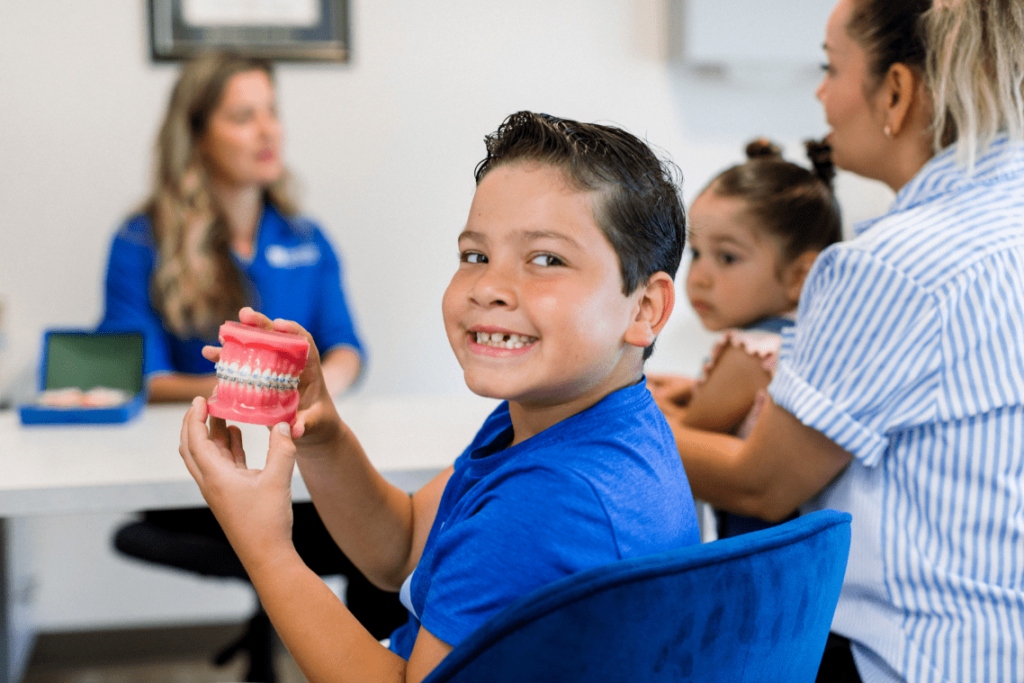
What’s the Difference Between an Orthodontist and a General Dentist?
Both orthodontists and general dentists graduate from dental school. The difference comes after. Orthodontists complete 2-3 extra years of accredited residency focused only on tooth movement, jaw growth, and bite correction. General dentists treat your overall oral health, think cleanings, cavities, and crowns, while orthodontists focus solely on aligning teeth and jaws.
According to the American Association of Orthodontists (AAO), only about 6% of dentists are orthodontists. Any licensed dentist can take a short Invisalign certification course, but orthodontists complete thousands of hours of specialty training in tooth movement specifically.
In most states, both providers can legally offer braces or Invisalign. The real difference is depth of expertise. At Laurent Orthodontics, Dr. Laurent is a Harvard & UCSF-trained orthodontic specialist, which means every treatment plan is backed by residency-level training in biomechanics, growth, and bite correction. Your smile is in expert hands.
[IMAGE_SUGGESTION: Side-by-side comparison graphic of a general dentist chair setup vs. an orthodontic office with 3D scanner]
How Training and Treatment Planning Actually Work
The training path starts the same for both providers, then takes very different turns. Here’s what each pathway looks like:
- Undergraduate degree (4 years). Both complete a bachelor’s degree with pre-dental coursework.
- Dental school (4 years). Both earn a DDS or DMD, learning general dentistry.
- Specialty residency (2-3 years). Only orthodontists continue, completing an AAO-accredited program focused exclusively on tooth movement, facial growth, and bite.
- Short certification courses. General dentists who offer Invisalign typically complete weekend or online certifications, not residency-level training.
By the time an orthodontist finishes training, they’ve logged thousands of specialty hours moving teeth and planning cases. That’s a meaningful gap in hands-on experience before a single patient sits in their chair.
What Treatment Planning Really Involves
The Invisalign trays themselves are identical no matter who orders them. What differs is the clinical plan behind them. A thorough orthodontic treatment plan includes:
- Digital X-rays and 3D intraoral scans
- Cephalometric analysis to study jaw position
- Attachment placement and force sequencing
- A detailed finishing plan (how the bite settles at the end)
Orthodontists typically monitor cases every 6-8 weeks and handle mid-treatment refinements in-house. At Laurent Orthodontics, Dr. Laurent personally reviews each case using digital photographs, digital X-rays, and the Invisalign clear aligner system to map out exactly which teeth move first, how much force to apply, and how the bite should finish. Each small adjustment compounds into the final result, which is why that planning step matters so much.
Benefits of Choosing an Orthodontic Specialist
When tooth movement is all you do, you get very good at it. Here’s what you gain by choosing an orthodontic expert like Dr. Laurent at Laurent Orthodontics:
- Specialized diagnostic skill for complex bites. Overbite, underbite, crossbite, and open bite each require specific mechanics. Orthodontists train for years on exactly these cases.
- Custom plans built around you, not cookie-cutter software. Some general practices rely on software-generated plans with minimal customization. A specialist tailors the plan to your anatomy, goals, and lifestyle.
- In-house mid-treatment problem-solving. Teeth don’t always move exactly as predicted. Orthodontists adjust attachments, request refinements, and change mechanics on the spot.
- Higher case volume means better pattern recognition. Seeing hundreds of similar cases helps a specialist spot issues early and finish stronger.
- Growth and development expertise. For children and teens, understanding jaw growth is critical. Timing treatment with growth spurts can prevent more involved treatment later.
- A full range of options. Laurent Orthodontics offers Invisalign, Invisalign for Teens, Clear Braces, Metal Braces, and Accelerated Orthodontics. That means the treatment is matched to your case, not the other way around.
Dr. Laurent has been voted best orthodontist in Sonoma Valley by readers of the Sonoma Index-Tribune six times, and she’s an active member of the American Association of Orthodontists. More than a decade of experience creating smiles in Sonoma means you’ve got options, and the clinical judgment to match them to your case.
Orthodontist vs. General Dentist: Side-by-Side Comparison
Curious how the two actually stack up? Here’s a quick comparison of what you can expect from each provider for orthodontic treatment.
| Factor | Orthodontist | General Dentist |
|---|---|---|
| Specialty residency | 2-3 years accredited | None (short certification) |
| Specialty training hours | Thousands of ortho-specific hours | Weekend or online courses |
| Scope of cases | All orthodontic appliances & complex bites | Typically mild-moderate alignment with Invisalign |
| Appliance range | Invisalign, metal braces, clear braces, accelerated options | Usually Invisalign only |
| Appointment frequency | Every 6-8 weeks | Varies |
| Mid-treatment refinements | Handled in-house | May refer out |
| Complex cases (extractions, surgical, pediatric growth) | Strongly preferred | Often referred to specialist |
| Simple adult crowding or minor spacing | Appropriate | May be appropriate |
Simple cases (minor crowding, a small gap) can sometimes be handled well in a general dental setting. Anything involving bite correction, growing patients, extractions, or previous orthodontic relapse is better suited to a specialist.
Which Provider Is Right for Your Case?
Not every case needs a specialist, and not every case belongs in a general practice. Here’s how to think about it:
A general dentist may be sufficient for:
- Mild adult crowding
- Minor spacing
- Small cosmetic touch-ups
- Previously treated cases needing minor correction
An orthodontist is recommended for:
- Bite issues (overbite, underbite, crossbite, open bite)
- Complex crowding or rotations
- Cases that may need extractions
- Growing children and teens (jaw growth matters for timing)
- TMJ-related concerns
- Previous orthodontic relapse
All children and teens should see an orthodontist for an initial evaluation. Jaw growth affects when and how to treat, and timing really does matter. That’s why Laurent Orthodontics offers Orthodontics for All Ages and Invisalign for Teens, so growing smiles get specialist-level attention from the start. Dr. Laurent believes everyone deserves a beautiful smile, and that belief shapes how she plans care for patients of all ages.
Red flags to watch for at any office:
- Provider skips X-rays or 3D scans
- One-size-fits-all treatment plan
- Won’t commit to an estimated total treatment time
- No retainer plan after active treatment
When in doubt, a free orthodontic consult is a smart second opinion. There’s no obligation at Laurent Orthodontics, and you’ll leave with a clear picture of your options.
Frequently Asked Questions
Can a general dentist legally do braces or Invisalign?
Yes, in most states a licensed dentist can offer braces and Invisalign. The difference is training depth. Orthodontists complete 2-3 years of accredited specialty residency focused entirely on tooth movement, while general dentists typically complete short Invisalign certification courses. Legal to offer and clinically ideal are not always the same thing.
Would Invisalign or braces be better for me?
It depends on your case complexity, lifestyle, and how consistently you’ll wear aligners. Invisalign works well for many adult and teen cases and is nearly invisible. Braces (metal or clear) are often preferred for complex bite correction or when compliance might be an issue. Dr. Laurent can recommend the best fit after reviewing your digital scans and X-rays at a free consult.
What category does Invisalign fall under?
Invisalign is a type of orthodontic treatment, specifically clear aligner therapy. It uses a series of custom clear trays to move teeth gradually into their planned positions. It’s considered an orthodontic appliance, which is why it’s often handled by orthodontic experts trained in tooth movement.
Can I switch from a dentist to an orthodontist mid-treatment?
Yes, you can switch providers mid-treatment. It usually involves new records (X-rays, scans, photos), since the new office needs to understand where your teeth are and where they still need to go. If you’re unsure about current treatment, a second-opinion consult can clarify your options and give you confidence in next steps.
Curious what your smile could look like? Dr. Caroline Laurent and the team at Laurent Orthodontics offer a free consult at our Sonoma office (357 Perkins St.), with a Virtual Consult option if you’d rather start from home. Call 707-938-5255 or request your free consult online and love your smile.